

Introduction
The war in Ukraine has entered a stage of exhaustion, where one of the main levers of diplomatic and military pressure has become the so-called deepstrikes – deep strikes on critical infrastructure. While heavy positional battles continue on the front lines, the term “air truce” (or its narrower variation – “energy moratorium”) is increasingly heard in the corridors of world diplomacy .
As a political scientist, I urge you to cast aside illusions: the idea of stopping mutual missile and drone attacks seems like a logical first step towards de-escalation only at first glance. Behind the diplomatic formulation of “protecting civilian objects” lies a cruel mathematical and strategic calculation. For the United States, this is an attempt to draw “red lines” and reduce turbulence in global energy markets. For Russia, it is an opportunity to pause the devastating strikes by Ukrainian UAVs on refineries and oil depots, which undermine the economic foundation of the Kremlin. For Ukraine, this is a difficult choice between preserving the energy system and voluntarily giving up one of the most effective asymmetric levers of influence on the enemy.
In my detailed analysis on 34.ua, I propose to figure out: can the “air truce” become a reality, or is it just another informational and psychological game before a big round of negotiations? Who will actually benefit from the “silence in the sky”, and for whom will it become a trap?
Anatomy of the concept: what is an “air truce” and what do the parties invest in it
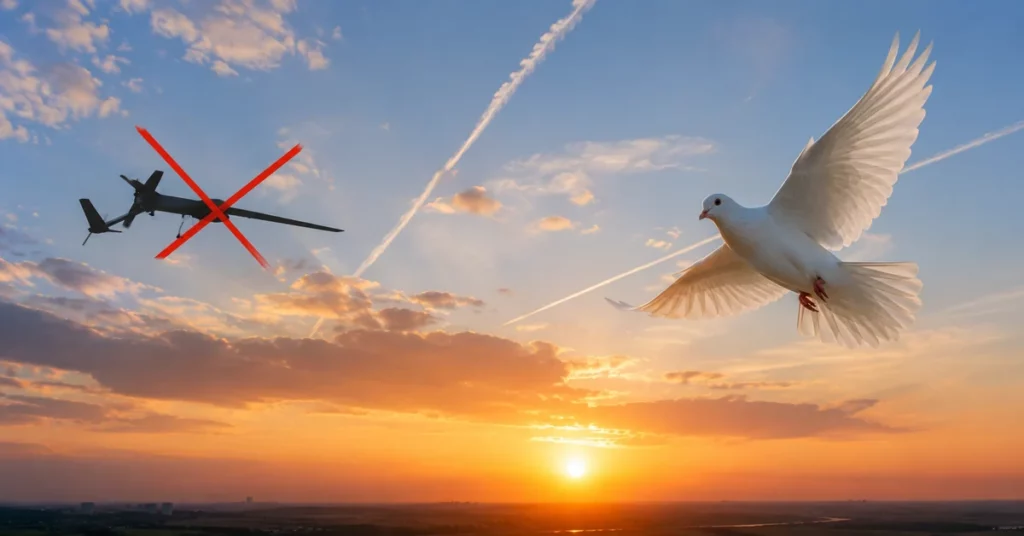
The term “air truce” appeared in the world diplomatic lexicon not as a product of a classical peacemaking process, but as a forced reaction to the exhaustion of both sides in the “drone and missile war.” Unlike a traditional ceasefire , where the parties stop artillery, assault operations, and advance on the contact line, an “air moratorium” puts the ground front on hold.
This is an attempt to introduce local hybrid rules of the game in the deep rear, where the cost of the damage inflicted begins to exceed the strategic benefit for external players.
Complete ceasefire vs. “Sectoral moratorium”
The main mistake of a superficial observer is to confuse a potential “air truce” with the end of the war. In reality, we are talking exclusively about sectoral restrictions :
Classic ceasefire: involves freezing the front line, stopping artillery shelling, withdrawing heavy equipment, and the presence of international observers (e.g., UN or OSCE missions). In the current circumstances, this is impossible due to the fundamental divergence of political goals between Kyiv and Moscow.
Sectoral moratorium (energy and civil infrastructure): This is an uncodified “non-aggression” agreement on a narrow list of facilities. Primarily, this concerns thermal power plants, hydroelectric power plants, substations, gas storage facilities, refineries, and oil depots .
The skeleton of operations remains: even under the conditions of a signed or verbal agreement on “air silence”, strikes on command posts, concentrations of manpower, and logistical nodes in the frontline zone (at a depth of 50–100 km) will continue. KABs, FPV drones, and rocket artillery fall outside the scope of this moratorium.
| Parameter | Complete ceasefire | Sectoral “air truce” |
| Coverage | To the entire front and rear | Only strategic rear (energy/refinery) |
| Tactical weapons | Completely prohibited | Can be used without restrictions (FPV, CAB, ART) |
| CONTROL | International observers | Mirror threat of retaliation |
| Purpose of the parties | Fixing boundaries / pause | Saving the economy and critical systems |
The evolution of the initiative: from secret consultations to geopolitical intermediaries
The idea of protecting critical infrastructure has gone from a few private attempts to involving key global players:
Winter consultations and “agreement-making”: the first impulses to limit strikes on the energy sector appeared against the background of the risk of systemic collapse of the Ukrainian energy system and the simultaneous start of massive attacks by Ukrainian UAVs on Russian refineries. However, any dialogues were disrupted by successive waves of escalation and a lack of trust.
Middle East involvement (Qatar, UAE): Doha and Abu Dhabi joined the process as traditional mediators on sensitive issues (prisoner exchange, return of children). Qatar tried to act as a platform for indirect negotiations on the security of civilian infrastructure, since the stability of the global gas and oil market directly affects the interests of the Gulf countries.
The Washington factor: The US became the key driver of this idea, guided by pragmatic considerations: to avoid fuel price spikes and prevent uncontrolled escalation that could drag NATO into direct confrontation with Russia.
Kyiv’s position: mirroring condition and protection of energy independence
For Ukraine, the issue of an “air truce” is the most controversial. On the one hand, stopping Russian missile strikes is the only way to give energy companies time to restore damaged substations and thermal power plants and prepare for another difficult heating season.
On the other hand, Bankova puts forward two concrete conditions:
The principle of absolute mirroring: Ukraine will agree to stop attacks on Russian refineries, oil depots, and ports only if there is a complete and verified cessation of attacks on the Ukrainian energy system. Any isolated attack by the Russian Federation means the immediate cancellation of the agreements.
Preservation of sovereignty of decisions: Kyiv refuses to sign any documents that would limit the development of the domestic military-industrial complex (in particular, long-range UAVs and missiles of the “Palyanytsia” or “Neptun” type). The ceasefire can only concern targets , but not weapons .
Analytical conclusion: The “air truce” in its current form is not about peace, but about an attempt by both sides to establish new boundaries of what is permissible in a war of attrition. For Ukraine, this is a high-stakes game, where on one side of the scale is light and warmth in the homes of millions of citizens, and on the other – the rejection of the only tool that makes the Russian economy feel the price of war.
Why does the Kremlin urgently need a break in the air?
Publicly, Moscow continues to broadcast a rhetoric of intransigence, but behind the scenes of the Russian General Staff and the Ministry of Energy, a large-scale crisis is unfolding. The air war that the Russian Federation expected to wage unilaterally has turned against itself. The Ukrainian Deepstrikes strategy has turned Russia’s economic and military-industrial rear into a continuous hit zone.
Ukrainian “Deepstrikes”: How Long-Range Drones Are Eroding an Oil Superpower
The Ukrainian program of long-range drones and custom winged systems has evolved from isolated actions to a systematic campaign of enemy attrition . The forces of the Armed Forces of Ukraine’s unmanned systems, together with intelligence structures, changed tactics: instead of striking at huge and hard-to-attack oil storage tanks, the targets became critical rectification nodes — rectification columns (AVT/AVDU).
Surgical precision: the distillation column is the “heart” of any refinery. Its failure stops the entire technological cycle of raw material processing.
Geography of expansion: the radius of destruction of Ukrainian UAVs exceeded 1,500–2,500 km. Strikes on objects in Tatarstan, Bashkortostan, Yaroslavl and Omsk regions proved that the depth of Russian territory is no longer a guarantee of security.
Hitting top facilities: systematic attacks on over three dozen Russian refineries (including the Moscow Refinery in Kapotno, Ryazan, Kstovo, and Omsk refineries) led to a forced reduction in oil refining volumes in the Russian Federation.
The problem of Russian air defense: the dilemma of a blanket that is too short
The Russian air defense system is one of the densest in the world, but it was created with the concept of repelling NATO air strikes and ballistic missiles in mind, not massive swarms of small, low-flying UAVs with a high degree of autonomy.
The Kremlin found itself facing a tough strategic dilemma :
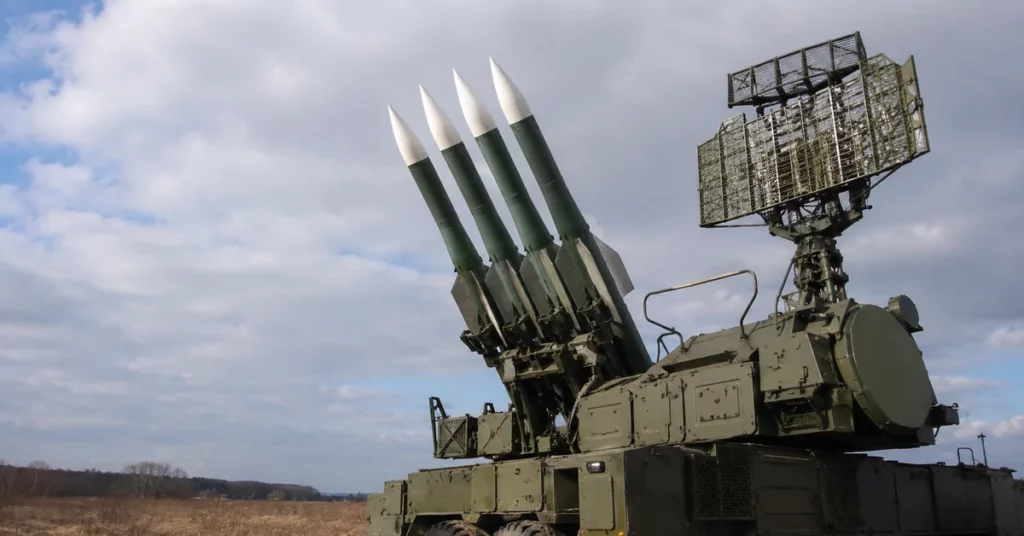
Dispersion of resources: to reliably protect one medium-sized refinery, at least a battery of air defense systems (Pantsir-S1, Tor-M2, or S-300/400) is needed. Considering that the Russian Federation has over 30 large refineries, hundreds of oil depots, dozens of compressor stations, airfields, and defense plants, the physical number of air defense systems in Russia simply does not exist.
Front priority: every Pantsir deployed to cover the oil refinery in the Samara or Yaroslavl regions creates a gap on the front line or in occupied Crimea, which Ukrainian HIMARS operators and aviation immediately take advantage of.
The economics of interception: shooting down a Ukrainian drone worth $20,000-$50,000 with a scarce S-400 or Pantsir missile costing $200,000 to $1.5 million is a math of attrition in which Russia is guaranteed to lose.
Economic dimension: losses in the oil and gas sector and the threat of a fuel crisis
The attacks on oil refineries struck at the most vulnerable point of the Kremlin’s war machine — direct revenue from highly refined products and the military’s fuel logistics.
Refining slumps: Russia’s primary oil refining volumes have sunk to multi-year lows in some months, forcing the Kremlin to export more cheap crude, losing margins on gasoline and diesel sales.
Strikes on military logistics: Diesel fuel is the “blood” of Russian tanks, trucks, and railway tractors. Constant shortages force the Russians to haul fuel rail trains from the Siberian hinterlands, significantly complicating the logistics of the Russian Armed Forces.
The threat of a domestic political explosion: rising fuel prices within the Russian Federation are causing chain inflation on food and logistics. The bans on gasoline exports imposed by the Russian government are only partially extinguishing the fire, and talk of importing gasoline from Belarus and Kazakhstan is becoming a devastating blow to the image of the “energy superpower.”
Analytical conclusion: for the Kremlin, the “air truce” is not a manifestation of humanism or a desire for peace. It is an urgent technological and economic timeout . Putin needs a pause to restore the destroyed column installations at the refinery (which, in the conditions of Western sanctions on equipment, is an extremely difficult task), accumulate air defense systems, and regroup forces.
The price of “quiet skies” for Ukraine: risks and hidden traps
On the surface, the idea of an “air truce” looks like an obvious humanitarian achievement: it promises to protect the remnants of Ukrainian generation from devastating blows, keep homes warm, and allow power engineers to carry out restoration work. However, behind this attractive facade lurk existential risks to Ukraine’s defense capabilities.
For the military-political leadership in Kyiv, agreeing to such moratoriums is always walking through a minefield, where the price of a mistake can be the loss of strategic initiative.
Loss of asymmetric leverage: why refusing to strike Russia plays against the Armed Forces of Ukraine
The main trap of the moratorium lies in the symmetry of prohibitions in the face of a colossal asymmetry of resources .
Strategic Disproportion: Russia has significant superiority in artillery, aircraft (CABs), manpower, and ballistic missiles. Ukrainian long-range drone and missile strikes on Russian refineries, ammunition depots, and airfields are one of the few asymmetric tools that force the Kremlin to pay a real economic and logistical price for continuing the war.
Removing economic pressure from Russia: By ending attacks on oil refineries and fuel terminals, Ukraine voluntarily removes the threat of a fuel crisis in Russia. This allows Moscow to stabilize domestic fuel prices, restore export revenues to the budget, and unhindered supply of diesel for military equipment at the front.
Diplomatic disarmament: without the constant threat of burning refineries near Moscow or in the Volga region , the Kremlin loses motivation to make any other advances. Deepstrikes are almost the only argument that converts into Russia’s readiness for real compromises.
Russia’s Accumulation of Missile Potential: Speeding Up the Conveyor in Silence
For the Russian defense-industrial complex, any pause in the shelling of Ukrainian energy is not a step towards peace, but a technological and logistical “pit stop”
Boosting production: Russia’s military-industrial complex is operating around the clock. Intelligence estimates suggest that Russia is capable of producing over 100–120 precision-guided missiles and hundreds of Shahed/Geran UAVs per month. The lack of weekly mass launches allows the Russian military to build up a disorganized missile arsenal for future attacks.
Modernization and adaptation: while there is “silence”, the Russians are not just storing missiles in warehouses, but improving them – integrating new satellite navigation modules (CRPA antennas), protection systems against Ukrainian electronic warfare, and optical cameras for homing.
Preparing for a “superstrike”: the history of previous “ceasefire” attempts shows: after accumulating a critical mass of missiles, Russia looks for a formal pretext, declares the moratorium “completed” and delivers a combined strike of such force that it penetrates even a dense air defense system.
Verification question: how to monitor compliance with silence?
The weakest point of any potential “air truce” agreement is the lack of real mechanisms for control and assurance .
Lack of impartial observers: unlike the front line, where it is theoretically possible to deploy physical missions (UN or international monitors), it is almost impossible to record preparations for a missile launch or a UAV flight thousands of kilometers behind the scenes.
The problem of the “gray zone” and proxy attacks: Russia regularly resorts to blurring responsibility. An attack can be carried out by an unmarked drone, hit an object “due to the work of electronic warfare” or be attributed to a “provocation by third parties.” How can you distinguish a targeted strike on a thermal power plant from the falling debris of a downed UAV flying to a nearby military depot?
Asymmetry of guarantors: Western partners (USA, EU countries) have leverage over Ukraine through arms supplies and financial assistance. On the other hand, mediators such as Qatar or the UAE do not have a critical leverage over Russia. If Moscow violates the agreement, it will not face immediate punitive consequences from its diplomatic mediators.
Analytical conclusion: “Quiet skies” for Ukraine may turn into a dangerous illusion of security. By allowing the enemy to rest and accumulate missiles, Ukraine risks facing an even more devastating blow in the future, while losing its strongest lever of economic influence over Russia.
American vector: why Washington is pushing for an “energy moratorium”
In the Kyiv-Moscow-Washington triangle, it is the United States’ position on the “air truce” that has proven to be the most ambiguous. While Ukraine views strikes on Russian rear areas as a means of self-defense, and the Russian Federation as an instrument of terror and attrition, for the White House this problem lies in the realm of global economic stability, domestic political ratings, and geopolitical risk management .
The factor of world oil prices: domestic challenges and markets
The decisive factor in the pressure from Washington is the cruel mathematics of American politics and the global raw materials market:
Gas station prices as a key political indicator: for the average American voter, the price of a gallon of gasoline at the gas station is perhaps the main marker of the success of the current US administration. Any rapid increase in prices immediately accelerates inflation and lowers the government’s ratings.
The effect of Ukrainian “Deepstrikes”: Ukrainian UAVs are disabling a significant percentage of Russian oil refining. This forces Russia to reduce exports of finished fuel and redirect crude oil to foreign markets, creating a severe shortage and turbulence in the global markets for diesel and high-octane gasoline.
The threat of a chain reaction: Washington fears that further destabilization of the Russian fuel sector will force the Kremlin to raise the stakes — for example, block oil exports through the Caspian Pipeline Consortium (through which Kazakh oil from Western companies flows) or sabotage sea routes.
Measured confrontation: the US strategy for containing escalation
Since the first days of the full-scale invasion , Managing Escalation has been a key US doctrine . The main objective of this concept is to prevent a direct military clash between NATO and Russia.
Destroying “red lines”: The United States has long feared that massive strikes on Russian territory using Western or even Ukrainian-developed weapons could provoke Moscow to take unpredictable steps (up to and including the use of tactical nuclear weapons or hybrid strikes on NATO infrastructure).
Attempting to set limits: Unable to completely prohibit Ukraine from scaling up the production of its own long-range weapons, Washington is trying to limit their use through diplomatic limits and an “air moratorium.”
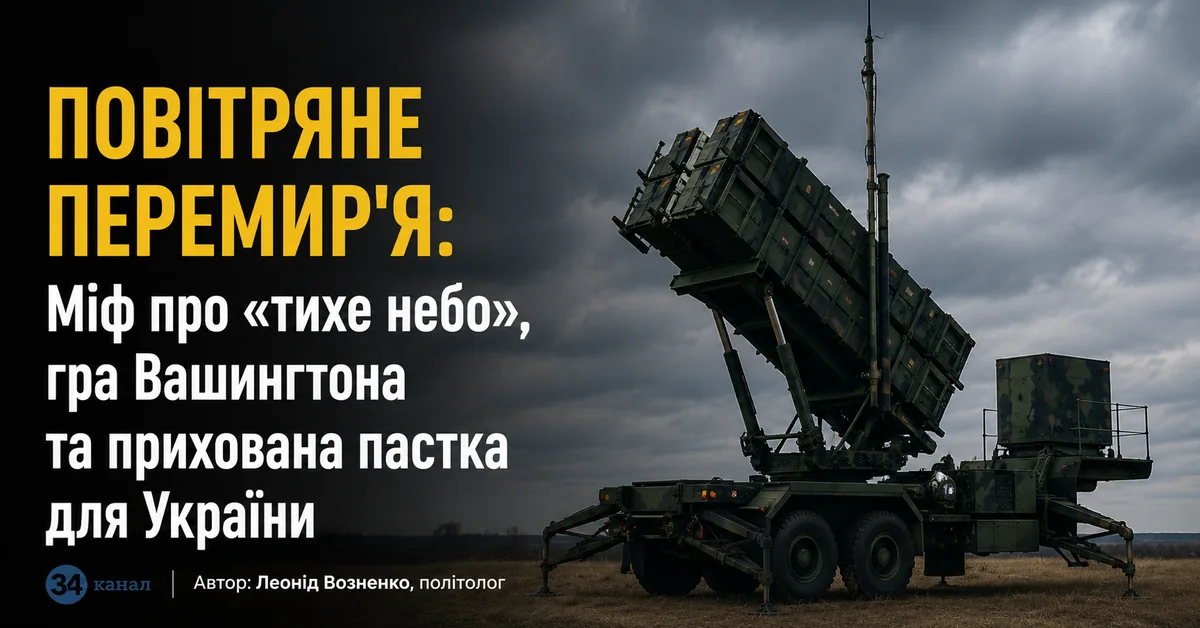
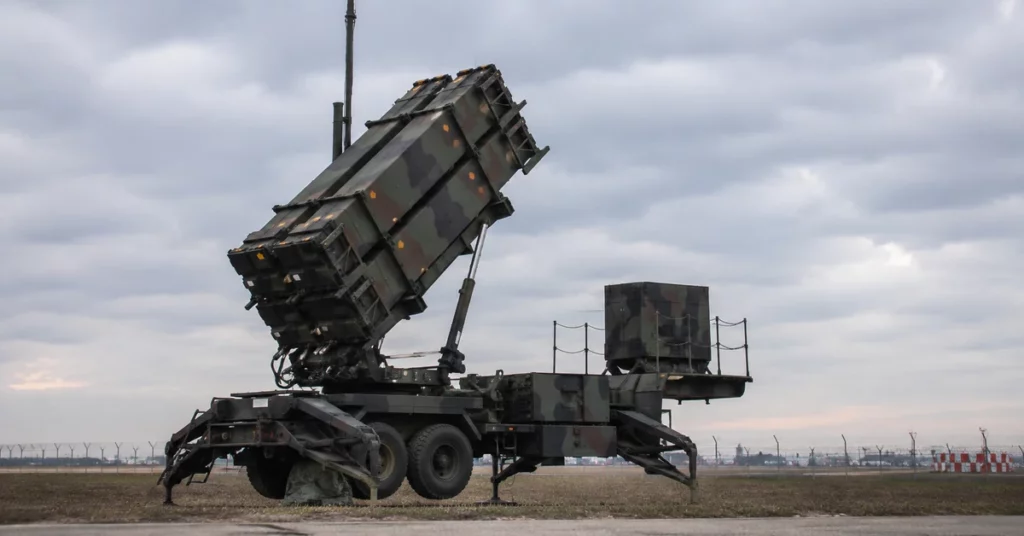
Weapons as leverage: the supply of defense systems (including additional MIM-104 Patriot batteries, missiles for them, and aviation weapons) is often tacitly tied by partners to a policy of “restraint” regarding certain types of Russian targets.
The role of the Middle East (Abu Dhabi, Doha) in shaping the “new formula”
Since direct dialogue between Ukraine and Russia is virtually absent, the role of bridges and platforms for indirect negotiations has been taken over by the Persian Gulf countries — the United Arab Emirates (Abu Dhabi) and Qatar (Doha) .
Why the Gulf? The Gulf monarchies maintain an emphasized neutrality. They are important members of OPEC+, maintain working contacts with both Washington and Kyiv, as well as the Kremlin, and are directly interested in the predictability of the global energy market.
Special negotiation tracks in Abu Dhabi: at venues in the UAE, through the mediation of diplomats and American special envoys, modalities of sectoral and temporary silences are being worked out. The scheme provides for a system of indirect obligations: Kyiv and Moscow transmit their “stop lists” of objects through mediators.
The “Energy in exchange for energy” formula: a pragmatic formula is being promoted on the sidelines: Ukraine stops attacks on Russian refineries, oil pipelines, and export terminals, and Russia, in return, undertakes not to strike Ukrainian generation facilities, open switchgear of nuclear power plants, and substations.
Analytical conclusion: American activity around the “air moratorium” is driven by pragmatic aspirations to stabilize markets and keep the war within manageable limits. However, this position puts Ukraine in a difficult position, forcing it to balance the needs of its own partners and national security interests.
Scenarios of events: from local agreements to another disruption
The transformation of the idea of an “air truce” into a practical model depends on the situation on the front, the dynamics of the accumulation of weapons, and the level of pressure from international partners. Given the lack of direct legal agreements, developments will most likely follow one of three scenarios.
Scenario A: “Cat and Mouse” (Informal Mirror Pauses)
The most likely scenario is one that does not involve the signing of any official documents.
Mechanics: the parties reach so-called “gentlemen’s agreements” through intermediaries (Qatar, UAE, USA). Ukraine temporarily reduces the intensity or suspends strikes on refineries, and Russia refrains from attacks on energy facilities.
Dynamics: Pauses last from several weeks to several months. Each side uses this time to rebuild infrastructure, manufacture additional missiles and UAVs, and regroup air defenses.
The result: a precarious balance, periodically interrupted by “test” strikes and immediate mirror responses.
Scenario B: “Technical failure” and cascading escalation
A scenario in which agreements collapse due to the lack of verification mechanisms and deliberate sabotage by the Kremlin.
Mechanics: Russia uses the pause to stockpile 150–200 missiles and hundreds of Shaheds. The Kremlin then carries out a provocation under a foreign flag or strikes a logistics hub on the border with an energy facility, blaming Ukraine for the violation.
The result: an instant cancellation of silence regimes and a return to large-scale, combined attacks on critical infrastructure with renewed vigor.
Scenario B: “Fixing the status quo”
A scenario in which an “air truce” becomes the first element of a broader agreement to suspend the hot phase of the war.
Mechanics: Under strong pressure from Washington and Beijing, the parties agree to freeze not only strikes in the rear, but also intensive offensive operations on land.
Conditions: introduction of international space and radio-electronic monitoring of missile launches with the involvement of technical means from the United States and the Gulf countries.
Result: the war transitioned into a long-term “cold freeze” phase modeled after the Korean scenario.
Final verdict: does the “air truce” have any prospects?
The “aerial truce” is not a path to restoring justice or a stable peace, but a tool for a tactical pause in a war of attrition .
For Russia, this is a forced step designed to save the oil industry from collapse and buy time to replenish its missile arsenals.
For Ukraine, this is a difficult compromise: the opportunity to protect the energy system from final destruction at the cost of temporarily abandoning one of the most effective levers of economic pressure on the enemy.
In the near future, Ukraine faces a period of difficult maneuvers. Even if temporary quiet pauses are achieved, the main guarantee of security will not be diplomatic rhetoric or promises of mediators, but the development of its own military-industrial complex, the density of its air defense system, and readiness for an instant mirror strike in response.
Author: Leonid Voznenko , political scientist.