
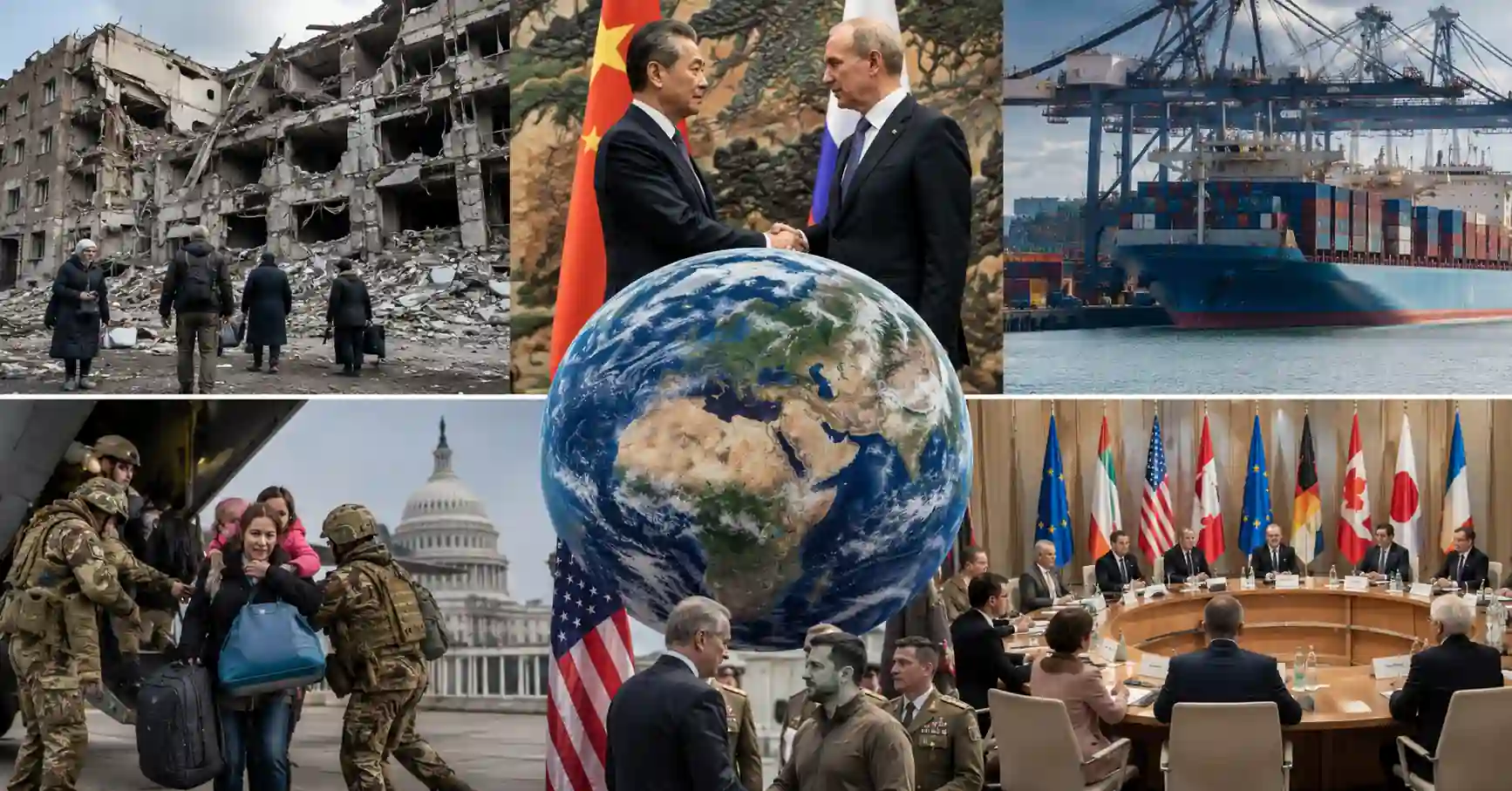
The attention of the world community and leading media is focused on two key international platforms. The main topics of the day were the first results of the summit of the leaders of the G7 countries in France, as well as the transition of Ukraine’s European integration aspirations into a practical, substantive phase.
As reported by the information portal 34.ua , the global political landscape is undergoing significant transformations this summer, where the Ukrainian issue remains one of the main factors in the formation of a new system of international security.
1. G7 Summit in Evian-les-Bains: Coordination of Efforts and New Sanctions
The first full working day of the G7 summit in Evian-les-Bains, France, was marked by the consolidation of efforts by the world’s key economies.
Among the main events of the day, international observers highlight several important aspects:
Dialogue at the highest level: The President of Ukraine, who is at the summit at the invitation of the French side, met with US President Donald Trump. The American leader noted that after the stabilization of the situation in the Middle East, the United States is focusing diplomatic resources on achieving a lasting and just peace in Eastern Europe.
Economic pressure from Canada: Canadian Prime Minister Mark Carney announced a new package of sanctions directly from the summit site. The restrictions include Russia’s “shadow fleet” of tankers, as well as key enterprises of the Russian defense-industrial complex.
Asian security vector: Japanese Prime Minister Sanae Takaichi, during her speech, called on G7 leaders to strengthen monitoring of military-technical cooperation between the Russian Federation, North Korea, and China, emphasizing that security in Europe and the Asia-Pacific region is indivisible.
2. Breakthrough in Luxembourg: start of substantive negotiations with the EU
In parallel with the global summit in France, an event that European analysts have already called historic took place in Luxembourg. Ukraine officially opened the first, basic negotiation cluster on membership in the European Union — “ The Fundamentals ”.
The transition of European integration from a political plane to a purely technical and legal one brought the following news:
Shifting diplomatic focus: Amid political changes in Hungary, the last procedural objections were removed from the agenda. The leaders of the “Weimar Triangle” (Poland, Germany, France) issued a joint statement in support of the fast-track negotiations.
Next step: The Council of the EU and the Ukrainian delegation have tentatively agreed on a work schedule. It is expected that the parties will move on to considering the next five thematic clusters on July 14 .
Clear benchmarks: Ukraine received a detailed roadmap covering justice reform, anti-corruption architecture, and financial control system. The parties noted that the fulfillment of these criteria is a prerequisite for the finalization of the accession agreement.
What does this mean for the internal context?
International activity directly affects the stability of financial and infrastructure markets within the country. Deepening cooperation with the EU and new assistance packages from the G7 allow for predictability of macroeconomic indicators and continuation of large-scale summer repairs of critical infrastructure facilities.
For residents of the regions, in particular the Dnipropetrovsk region, this means stable operation of logistics routes and the energy system. Current updates on public transport schedules, road repairs, and utility services can always be found on official information resources.