

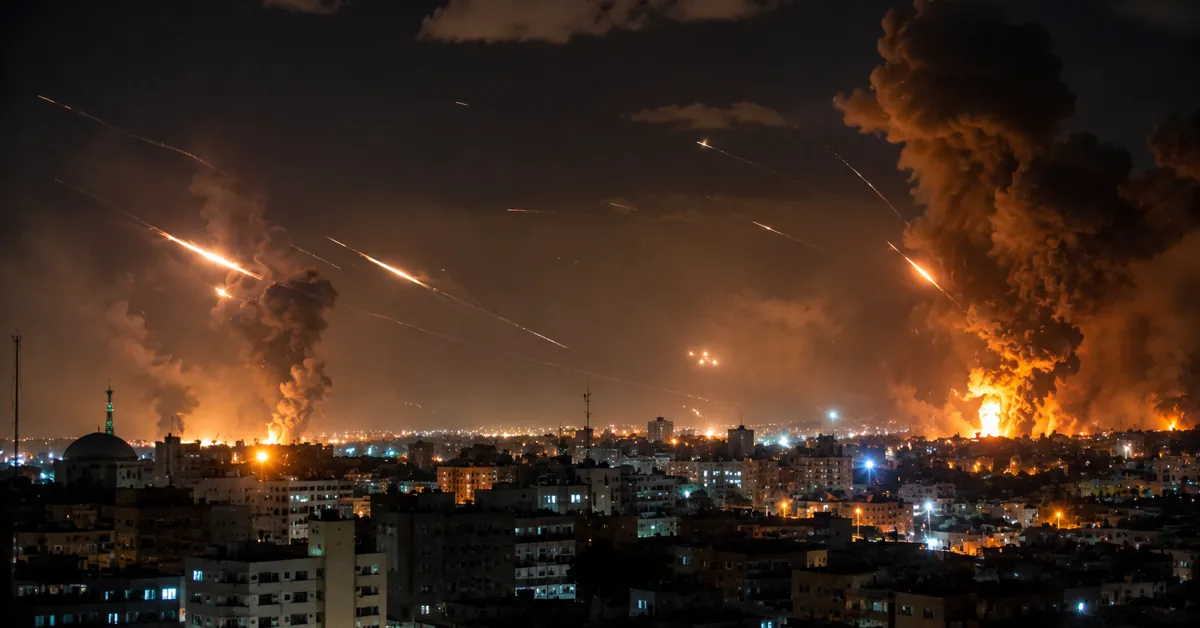
The situation in the Middle East is once again teetering on the brink of full-scale war. As reported by the information portal 34.ua , the US Central Command (CENTCOM) has carried out a series of powerful air strikes on military facilities in Iran. The operation was a direct response from Washington to the shooting down of an American AH-64 Apache attack helicopter over the waters of the Strait of Hormuz.
The sudden exchange of blows has threatened to shatter a fragile two-month ceasefire in the regional conflict, which has been ongoing since late February. UN Secretary-General Antonio Guterres has already called for immediate de-escalation, telling an emergency Security Council meeting that “there is a critical risk of localised fire escalating into a major all-out war.”
Proportional response or a new phase of war: details of the US air operation
The airstrikes were personally authorized by US President Donald Trump, who said that Tehran had “delayed peace talks for too long” and was now “forced to pay the price.” According to official CENTCOM data, US Air Force and Navy fighters, launched from aircraft carriers and regional bases, used precision weapons against Iranian air defense systems, ground-based UAV control points, and radar surveillance stations.
The main targets were military facilities in the areas of the strategically important port cities of Jask, Bandar Abbas, Sirik, as well as on the island of Qeshm in the Strait of Hormuz. According to Iranian media, American missiles also hit two large water tanks in the city of Sirik, leaving almost 20,000 civilians without drinking water in 45-degree heat. At the same time, US Defense Secretary Pete Hegseth warned that if Tehran does not stop its aggression, American aircraft will continue to deliver “powerful and precise” strikes over the coming nights.
Iranian retaliation and the threat to the oil market
Official Tehran categorically denied its involvement in the downing of the American Apache , calling the US actions “unprovoked aggression and a violation of sovereignty.” The Islamic Revolutionary Guard Corps (IRGC) immediately took retaliatory action: Iranian forces carried out massive launches of ballistic missiles and strike drones, attacking at least 22 targets in the Persian Gulf.
The strikes hit the territories of Bahrain, Kuwait and Jordan, countries that host US military bases. In particular, damage was recorded to infrastructure in the area of Kuwait International Airport. Iranian Foreign Minister Abbas Araghchi said that his country was exercising its inalienable right to self-defense, and called on foreign forces to “leave the region if they want to be safe.” Amid the escalation, global Brent oil prices have already jumped above $93 per barrel , showing a 25% increase since the beginning of the conflict.
Trump’s secret mission in the Strait of Hormuz
In parallel with the reports of airstrikes, Donald Trump made a resonant statement on his social network Truth Social. He confirmed that the Strait of Hormuz is currently blocked by Iranian forces to most civilian vessels, but the American military managed to carry out a “secret mission.”
According to Trump, by destroying Iranian radars, the US Navy secretly led commercial tankers through the strait, ensuring the export of more than 100 million barrels of oil bypassing the Iranian blockade. CENTCOM partially confirmed this information, noting that the US Navy provides constant coordination and fire support to merchant ships in regional waters. In confirmation of this, the military reported the destruction of the engine compartment of the Palauan-flagged tanker M/T Settebello , which was trying to secretly transport sanctioned Iranian oil through the blockade zone.
Expert opinions
Robert Lee, international security analyst (Washington):
“We are witnessing a classic game of raising the stakes. Donald Trump is using maximum firepower tactics to force Iran to sign a final peace deal on US terms. The downing of the helicopter was the trigger. But the danger is that Iran is cornered and ready to set the entire Gulf ablaze by attacking US allies. If the strikes continue tonight, the two-month truce will die for good, and the global economy will receive a colossal shock from energy prices.”
Mohammad Marandi, professor at the University of Tehran, political commentator:
“Washington is making a huge mistake, believing that the language of missile strikes can dictate Iran’s terms. An attack on the civilian infrastructure of the south of the country and the reservoir only consolidates society against an external enemy. The IRGC’s response to bases in Kuwait and Jordan clearly demonstrated that there are no longer any safe places for American soldiers in the region. Any further US attempt to ensure the forceful transit of oil will lead to a full-scale war at sea.”