

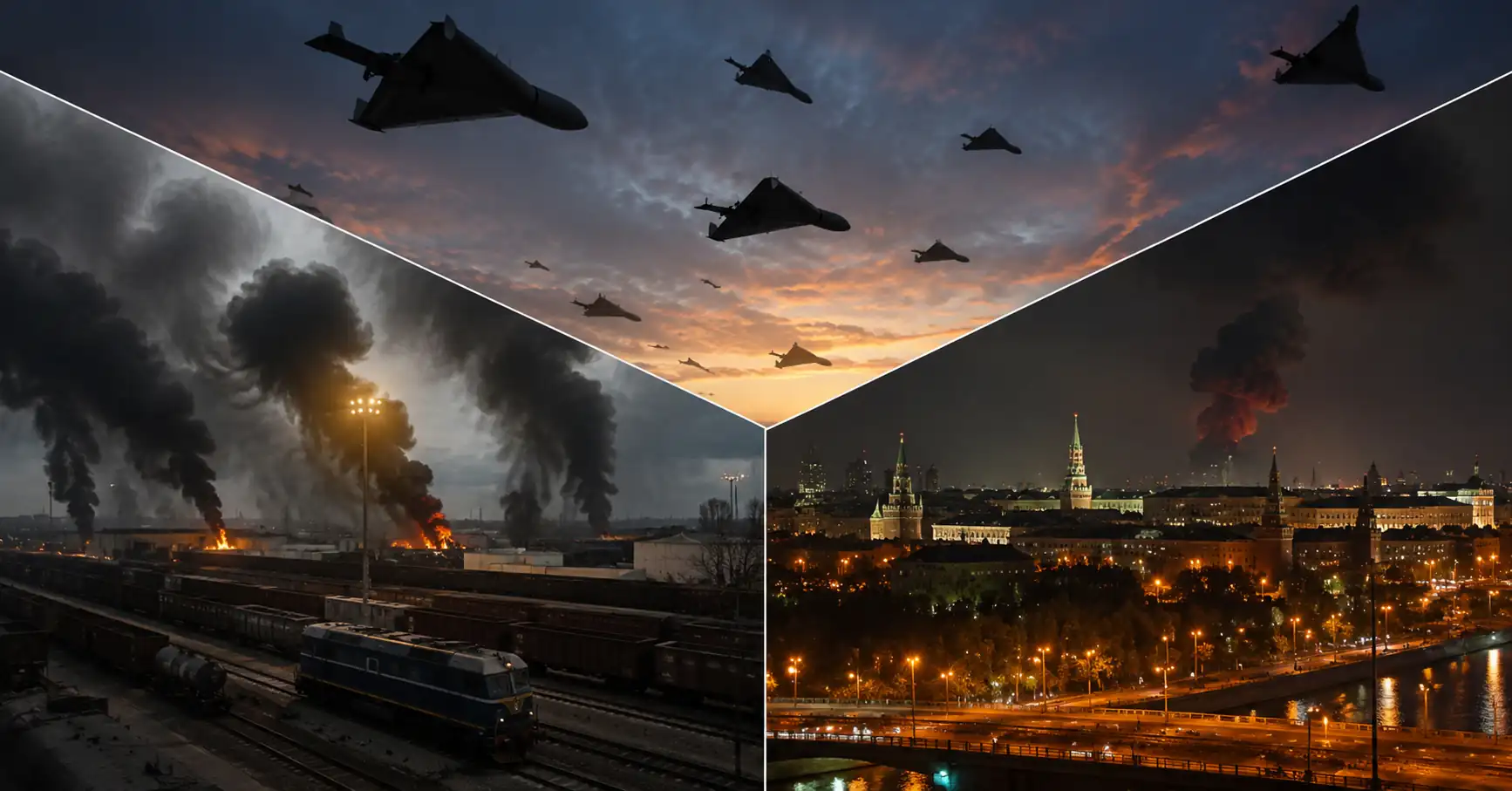
Ukraine continues to hold the blow in the confrontation, where the enemy is increasingly targeting civilian and logistical infrastructure. As reported by the information portal 34.ua , Friday night and morning turned out to be extremely tense for air defense forces and emergency services. Russian troops carried out another massive raid, launching dozens of strike drones, while Ukrainian kamikaze drones have been actively practicing on objects deep behind enemy lines for the second day in a row.
Chronicle of events: night terror and targeted strikes on exports
Air defense forces demonstrated high efficiency, neutralizing most air threats, but it was not possible to completely avoid destruction in the frontline and port regions.
Key events of the day on June 19:
Repelling the Shahed attack: on the night of June 19, Russia used 90 air strikes. Air defense forces neutralized 79 enemy UAVs . The main strikes fell on the central and southern regions.
Tragedy in the Odessa region: in the Bilhorod-Dnistrovskyi district, the enemy fired at a cargo parking lot. Two fuel tankers and a gas tanker caught fire. In addition, foreign civilian vessels under the flags of Panama and Saint Kitts and Nevis were hit in the Black Sea at the exit from the ports. One sailor was reported dead and four were injured.
Large-scale strike on Moscow: Ukrainian drones attack the Russian capital for the second day in a row. Moscow Mayor Sergei Sobyanin announced the shooting down of at least 37 UAVs in various areas of the Moscow region. Russian public media recorded the closure of airspace over airports and the work of emergency services.
Heat wave approaching: Ukrhydrometeorological Center forecasters recorded a temporary field of elevated pressure, but warned that abnormal summer heat will begin to enter Ukraine from the weekend, exceeding +30°C
Expert Opinions: Changing Enemy Tactics and the Economic Front
The intensification of attacks on civilian vessels and fuel logistics indicates the aggressor’s attempts to completely block Ukrainian maritime exports.
Mykhailo Samus, military analyst, director of the New Geopolitics Research Network:
“We see a clear shift in priorities in the Russian air terrorist campaigns of the summer of 2026. Having failed to completely destroy the energy system in the spring, the enemy switched to the grain corridor and fuel logistics. Strikes on foreign ships under neutral flags are an attempt to intimidate international shipowners and raise the stakes in maritime insurance. In turn, the massive raids of our drones on Moscow are not just psychological pressure, but forcing the enemy to withdraw scarce air defense systems from the front to protect its own government and economic center.”
Elena Boyko, logistics and international trade expert:
“The attacks on fuel tankers in the Odessa region and ships in ports are hitting the operational capacity of our exports. Russia is trying to create an artificial fuel deficit in the southern hubs that provide sowing and harvesting. Despite this, due to the rapid response of the State Emergency Service and the diversification of fuel supplies through the western borders, there is no critical impact on the market. However, businesses should prepare for increased security measures at any logistics terminals – they are now under the No. 1 target.”
Recommendations for citizens and businesses: safety in the conditions of summer 2026
Given the operational situation and weather forecasts, Ukrainians are advised to adhere to the following rules:
Don’t ignore lingering nighttime alarms. The large number of drones (up to 90 units) means that the threat can circle over areas for hours. Wait out the danger in cover or by following the two-wall rule.
To logistics business owners: Avoid mass gatherings of fuel tankers, grain trucks, and trucks in open areas, especially in the southern regions of Ukraine. Dispersing transport is the only way to preserve property.
Preparing for the heat: Drivers are advised to check their car cooling systems and not leave power banks, lighters, and plastic water bottles in direct sunlight in the cabins, which can act as lenses and cause a fire.